Can Mazda’s new car color increase your mood? Maybe. While no scientific study proves that driving a green car will instantly make you calmer, decades of color psychology research suggests green is associated with balance, nature, and relaxation. Mazda’s new Zinc Green isn’t just another paint option—it may subtly change how you feel every time you get behind the wheel.
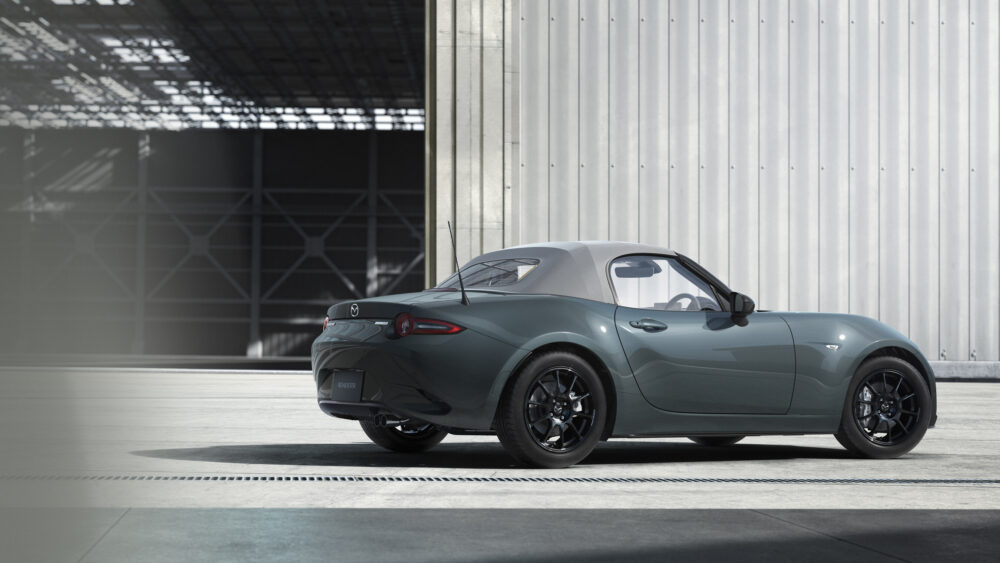
Mazda recently introduced Zinc Green for the MX-5 Miata during the Karuizawa Fan Meeting in Japan. According to the automaker, the new shade was designed as a lifestyle color that shifts depending on the lighting, looking vibrant in direct sunlight and more muted under cloudy skies. Gotta love earth tones.
But what caught my attention wasn’t the announcement.
It was the color itself.
Out of every shade Mazda could have chosen, why green?
The answer may have less to do with style and more to do with psychology.
Why People Naturally Respond to Green
Green has meant something important long before cars ever existed.
For thousands of years, green represented water, food, safety, and life. Our brains developed around forests, fields, and vegetation, making green one of the most familiar and comforting colors we encounter.
Scientists have also found that the human eye is especially sensitive to green wavelengths, making the color easier and more comfortable to look at than many others. That’s one reason operating rooms, night-vision displays, and emergency exits often incorporate green.
When you see green, your brain doesn’t simply recognize a color. Nerdy stuff but I love it.
It often associates it with calm, growth, balance, and restoration.
Can Mazda New Car Color Increase Your Mood?
The short answer is yes—but probably not in the dramatic way social media might suggest.
Color alone won’t erase a stressful commute or stop someone from cutting you off in traffic.
However, psychologists have found that colors can influence emotions and perception. Green environments have been linked to lower stress levels, improved mood, and feelings of relaxation.
If your daily commute already raises your blood pressure, surrounding yourself with softer, more natural colors may contribute to a more pleasant driving experience.
Think of it like listening to your favorite music while driving.
It doesn’t eliminate traffic.
It simply changes how you experience it.
Could Driving a Green Car Reduce Road Rage?
This is where things get interesting.
There isn’t any research proving that owning a green vehicle automatically reduces road rage.
But there are a few reasons it could have a subtle effect.
First, green is generally viewed as one of the least aggressive colors. Unlike bright red, which is often associated with speed and excitement, green communicates balance and stability.
Second, people often identify with the products they buy.
Someone who intentionally chooses a calm, understated color may already value a more relaxed driving experience.
Finally, other drivers may even perceive green vehicles differently. Color creates first impressions within seconds, and green tends to project confidence without aggression.
None of these factors are guaranteed to change behavior.
Together, though, they paint an interesting picture. This is the same reason why people choose Pepsi over Coke in a blind taste challenge.
Why Zinc Green Feels Different
According to Mazda, Zinc Green was developed as a lifestyle color similar to the company’s popular Polymetal Gray.
In bright sunlight, Zinc Green reveals deep, rich green tones.
As the lighting changes, it becomes softer with subtle gray undertones that almost resemble a matte finish.
Personally, I think that’s exactly why it works.
Most manufacturers seem determined to make every new color louder than the last.
Zinc Green doesn’t shout.
It whispers.
Instead of demanding attention, it feels confident enough not to.
That might be its biggest strength.
What Your Car Color Says About You
Let’s have some fun. Whether we realize it or not, people make assumptions about us based on color.
Here’s how different vehicle colors are commonly perceived:
- Red: Fast, exciting, energetic
- Black: Powerful, luxurious, authoritative
- White: Clean, modern, minimal
- Silver: Smart, technical, efficient
- Blue: Trustworthy, dependable
- Green: Calm, grounded, adventurous, outdoorsy
Of course, none of these stereotypes are always true.
But first impressions happen fast, and color is one of the first things our brains notice.
Should You Buy a Green Car?
If you’re hoping Zinc Green will magically make traffic disappear, you’ll probably be disappointed.
But if you appreciate thoughtful design and understand that small details can shape everyday experiences, Mazda’s newest color is worth a look.
We spend hundreds of hours each year inside our vehicles.
If the colors in our homes, offices, and clothing can influence our mood, it’s reasonable to think our cars can too—even if the effect is subtle.
Mazda may have introduced Zinc Green simply because it looks great.
The psychology behind the color just makes it even more interesting.